Documented, tested, verified
Mold Remediation: Containment, Air Scrubbing and Clearance Testing
The short version: mold remediation is the formal, documented version of getting mold out of a building: sealed containment, negative air pressure, HEPA filtration, controlled removal, then an independent clearance test that proves the space is clean. It is what insurers, home buyers and landlords ask for. Typical Georgetown projects run $1,500 to $8,000, large ones more. Call (437) 475-8501 to talk through whether you need it.
What makes remediation different from a cleanup?
Anyone can remove visible mold. Mold remediation exists to answer a harder question: how do you prove the problem is actually gone? The answer is a documented protocol, and the reference standards for it come from the IICRC. The answer is process. The work area is isolated so spores cannot spread, the air is continuously filtered while contaminated material comes out, and when it is done, someone with no stake in the result tests the air and surfaces, compares the counts against outdoor baseline samples taken the same day, and puts the numbers in writing. That report is what an adjuster funds, a buyer's lawyer accepts and a tenant dispute ends on.
You will most often need this version in four situations: an insurance claim where mold followed a water loss, a real estate transaction where an inspection flagged mold, a rental property where documentation protects both sides, and any job big enough that spores have had weeks to travel through the house.
The remediation protocol, step by step
1. Scope and moisture mapping. We identify affected materials, meter the moisture, and write a scope that names the cause. Remediating without killing the water source is theatre.
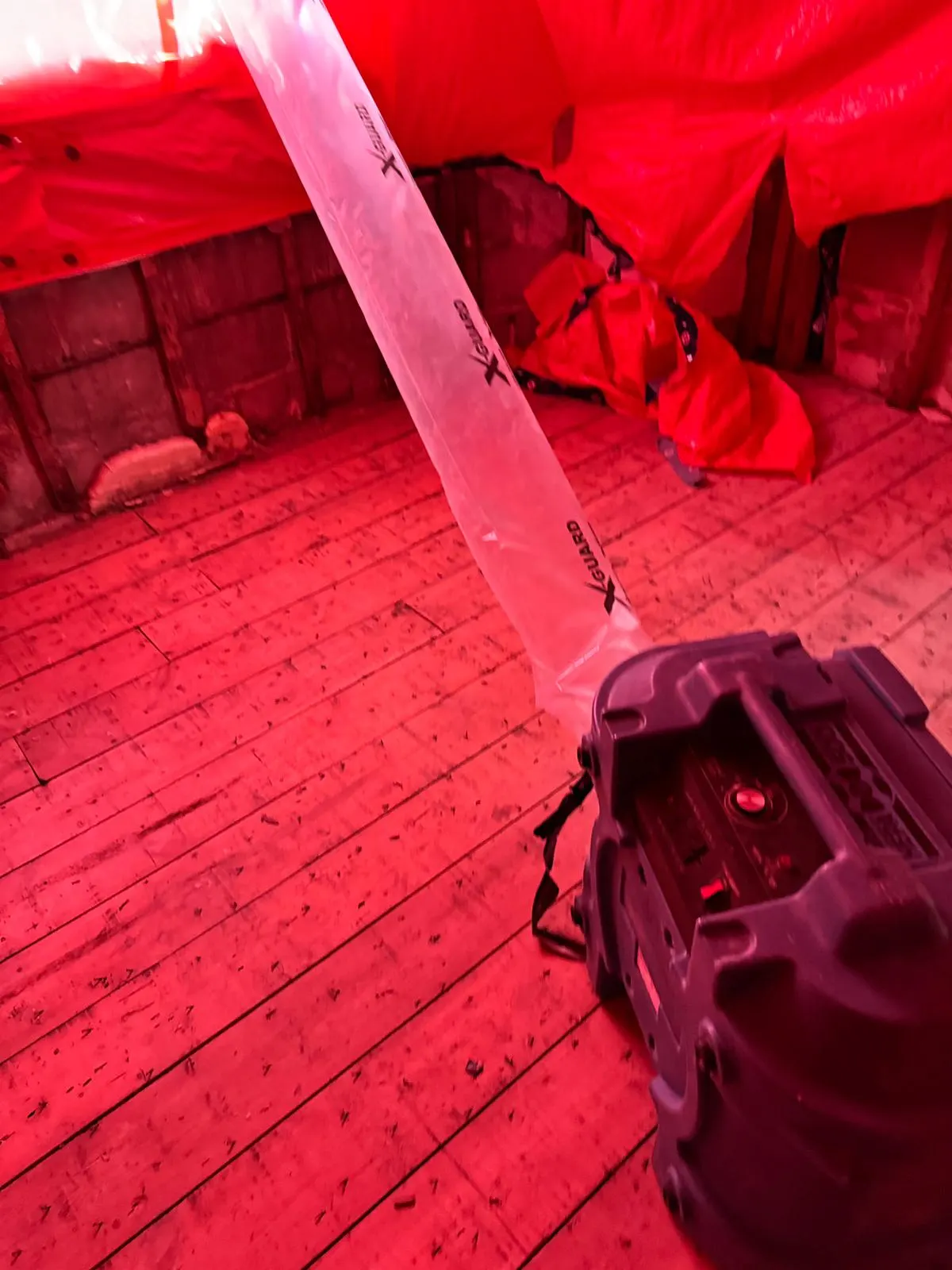
2. Containment. The work area is sealed in polyethylene with a zippered entry. On larger jobs we build an airlock so workers can decontaminate without opening the containment to the house.
3. Negative air and HEPA scrubbing. A negative air machine exhausts filtered air outside, keeping the containment at lower pressure than the rest of the home, so any leakage flows in, never out. HEPA air scrubbers cycle the containment air continuously through the job.
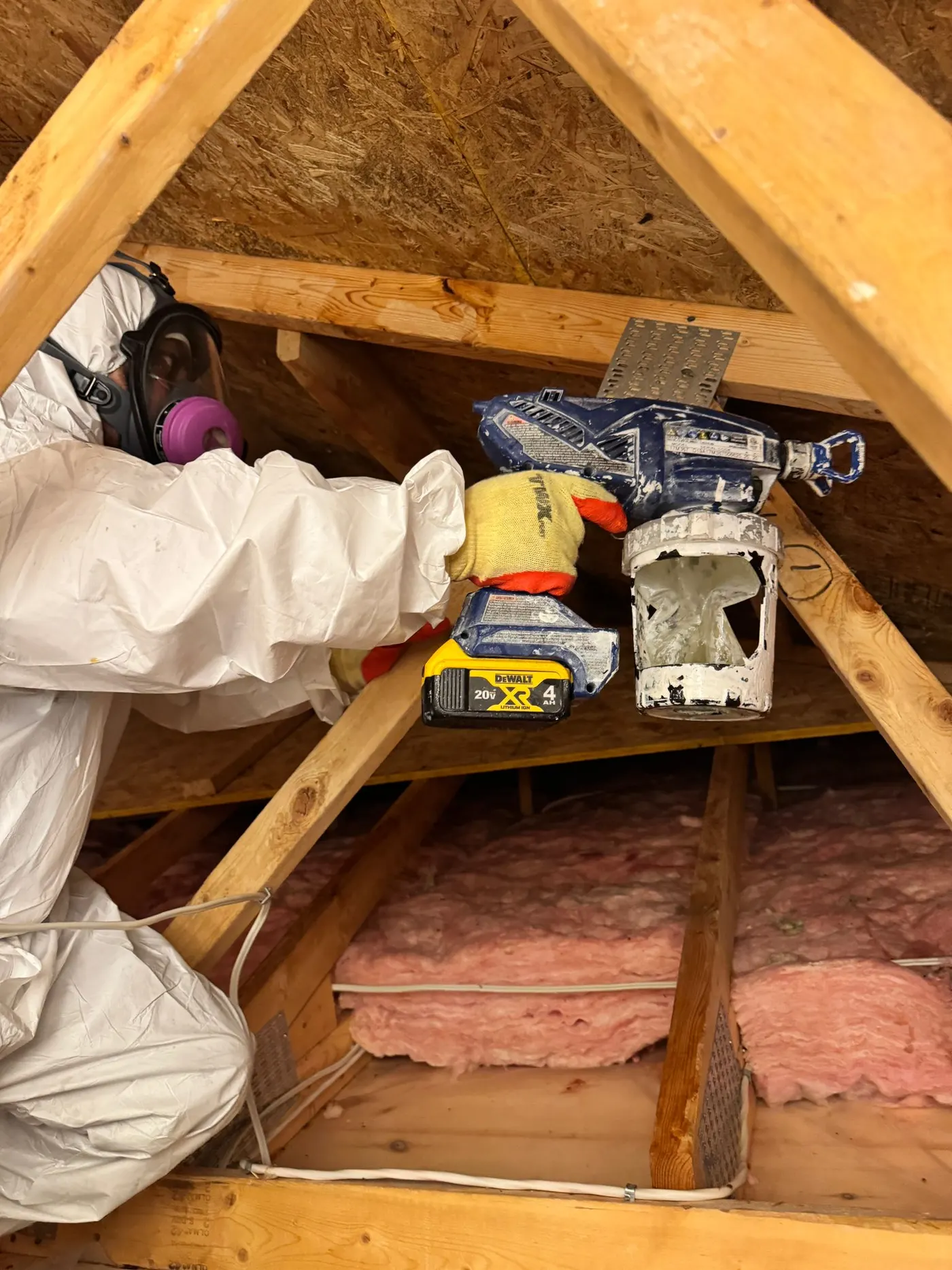
4. Controlled removal. Contaminated drywall, insulation and other porous materials are cut out, bagged inside the containment and sealed before they travel through your house. Framing and hard surfaces are HEPA vacuumed, damp wiped and treated.
5. Dry-down. The cause gets fixed and the space is dried to normal levels, because a clean wet room is a mold farm with a head start.
6. Independent clearance. A third-party environmental firm samples air and surfaces. Pass, and rebuild can begin. Fail, and we re-clean at our cost until it passes. You keep the report.
What does mold remediation cost in Georgetown?
| Scope | Typical situation | Typical range |
|---|---|---|
| Single contained room | Bathroom, bedroom wall, cold room | $1,500 to $4,000 |
| Basement or attic | Larger containment, more removal | $3,000 to $8,000 |
| Multi-room or HVAC involved | Spread through the home | $8,000 to $20,000 |
| Clearance testing | Billed directly by the independent firm | $300 to $600 |
Insurance-funded remediations are scoped with your adjuster before work begins, so the approved amount and the invoice match.
What the paperwork you keep actually contains
Remediation without documentation is just cleaning with extra plastic. Every project closes with a file you keep permanently: the initial scope with moisture readings and photographs, a containment plan showing what was isolated and how, progress photos of the removal, disposal records for the contaminated material, the dry-down log showing the space returned to normal moisture levels, and the independent clearance report with its lab results. That file is what turns "we had mold once" into "we had mold, here is proof it was handled properly." Buyers' agents accept it, insurers fund against it, and if you sell the house a decade from now it answers the disclosure question in one attachment.
Timelines when insurance or a sale is driving
Most remediation projects have a deadline attached: a closing date, an adjuster's approval window, a tenant re-entry date. The honest sequencing looks like this. Scoping and the written estimate take one visit plus a day. Adjuster approval, when insurance is funding, typically adds a few days to two weeks depending on the insurer, and we send the scope in their format to shorten it. The physical work runs 2 to 4 days for a single containment and up to two weeks for multi-room projects. Clearance sampling happens the day the cleaning finishes, with lab results back in 1 to 3 business days. Rebuild starts only after the pass. If a real estate closing is the pressure, tell us the date on the first call and we work the schedule backward from it, including telling you plainly if it cannot be met.
A warning about older homes: mold is not the only hazard in the wall
Remediation in houses built before roughly 1990 regularly uncovers a second problem: asbestos in plaster, drywall joint compound, vinyl floor tiles or old duct wrap. Cutting into those materials without testing is how a mold job becomes an exposure incident. Where age makes it plausible, we test suspect materials first and, if needed, fold asbestos abatement under the same containment discipline into the project instead of discovering it halfway through. Our Georgetown service area is full of pre-1980 housing where this double-hazard scenario is routine, not rare.
Mold remediation questions
Who does the clearance testing, you or a third party?
An independent environmental firm, always. The company that did the remediation should never be the one grading its own work. The tester samples the air and surfaces inside the containment, compares spore counts against outdoor baselines, and issues a written clearance report you keep.
How long does mold remediation take?
A single contained room typically runs 2 to 4 days including the clearance test. Larger scopes, attics, multiple rooms or anything involving the HVAC system, run one to two weeks. The written scope includes the schedule, and rebuild starts only after clearance passes.
Do I need remediation or is removal enough?
If nobody is demanding paperwork and the area is modest, straightforward removal done properly is usually enough. You need the formal protocol when an insurer, buyer, lawyer, landlord or air-quality report is involved, when the area is large, or when spores have had time to travel through the house. If you tell us the situation, we will tell you which one you actually need, including when the answer is the cheaper one.
Does mold remediation kill mold in the air too?
The air scrubbers run continuously during the work, pulling air through HEPA filtration that captures spores down to fractions of a micron. Combined with negative pressure, which keeps containment air from escaping into the rest of the house, airborne counts inside the work area drop to normal background levels by the end of the job, and the clearance test proves it.
Can we stay in the house during remediation?
Usually yes. The point of containment and negative air is precisely that the work area is sealed off from the living space, so a basement or single-room remediation typically lets the household carry on upstairs with some noise and a hallway of poly to tolerate. The exceptions are whole-home projects, work involving the HVAC system, which may need to be off during the job, and households with members whose health makes any risk unacceptable. We tell you which case yours is before you commit.
Do you remediate attics and HVAC systems?
Attics, yes, and they are among the most common residential mold projects there are: a bathroom fan venting into the attic for a decade will reliably mold the sheathing above it. The remediation is media blasting or hand cleaning of the underside of the roof deck under containment, plus fixing the ventilation cause. Ductwork contamination is assessed case by case; where duct cleaning to remediation standards is needed we bring in the specialty equipment for it and verify like everything else.
What does the mold remediation cost include?
Containment materials, negative air and scrubber rental, labour, controlled removal and disposal, antimicrobial treatment and drying. Third-party clearance testing is billed by the testing firm directly, typically $300 to $600, so their independence is real. Rebuild of removed drywall and finishes is quoted separately once clearance passes.