24/7 emergency service
Water Damage Restoration for Georgetown and Halton Hills Homes
The short version: call (437) 475-8501 and we are on site within 1 hour, day or night. Standing water comes out the same visit, drying equipment goes in the same day, and most homes are dry in 3 to 5 days. Typical water damage restoration runs from about $900 for a single soaked room to $15,000 or more for a flooded basement with sewage, and we give you the range in writing before work starts.
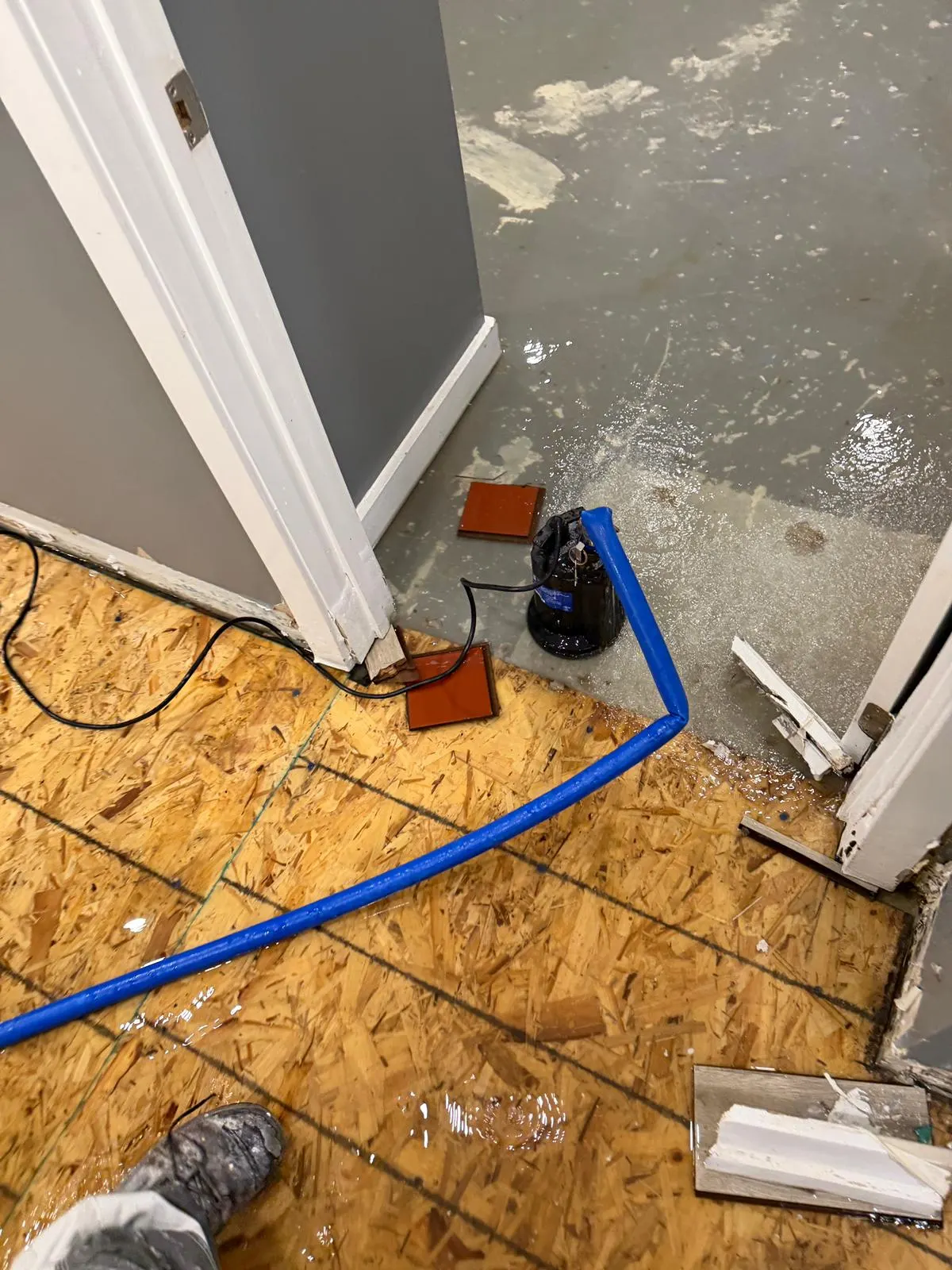
What water actually does to a Georgetown home
Water damage restoration is two races run at once. The first is against absorption: drywall wicks water upward at a visible pace, and subfloor and framing soak it up more slowly but hold it far longer. The second is against biology, because mold can establish itself on damp material within a day or two. Winning both races means extraction and drying on day one, not a quote visit on day one and equipment on day three.
Where the water comes from depends a lot on which Georgetown you live in. The mid-century Delrex streets, built out by Rex Heslop from the late 1950s, and the older homes around downtown mostly predate plastic weeping tile: many Ontario homes built before the 1970s drain their foundations through clay tile that cracks, silts up and quietly stops working, so their basements leak from the outside in during a thaw or a long rain. Georgetown South subdivisions from the 1990s and 2000s have modern PVC perimeter drains but finished basements that depend on a single sump pump, so their floods tend to come from pump failures and burst supply lines, and every dollar of damage lands on finished floors and drywall instead of bare concrete. We carry equipment for both problems, and both are ordinary failure modes in the Georgetown neighbourhoods we cover.
Our water damage restoration process, hour by hour
Hour one: stop and extract. We arrive within the hour, find and stop the source, and get standing water out with emergency water extractionequipment. Before anything is moved, everything is photographed for your insurance file.
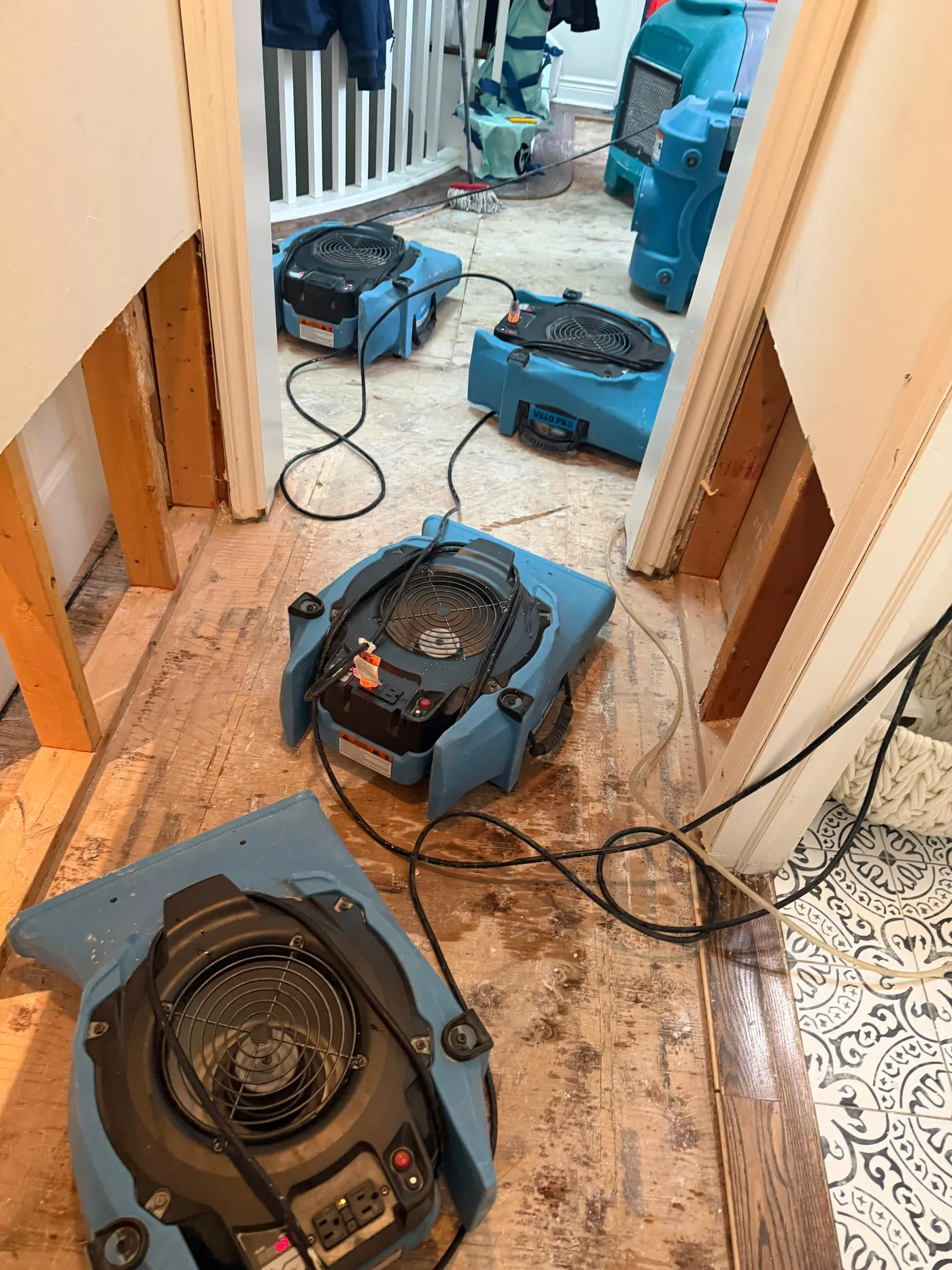
Same day: map and stabilize. Moisture meters and a thermal camera tell us how far the water actually travelled, which is nearly always further than it looks. Wet carpet pad comes out, baseboards are lifted where needed, and air movers and dehumidifiers go in. You get an equipment count and a daily plan in writing.
Days 2 to 5: dry and verify. We return daily to log readings and reposition equipment. Drying ends when the numbers say dry, and you see the readings, not when a calendar says so. Those targets come from the industry drying standards published by theIICRC, not from a guess about how long a room ought to take.
After drying: repair. Cut drywall, flooring, trim and paint are restored under a fixed written scope. If a claim is open, the scope goes to your adjuster before work begins so there are no coverage surprises at the end.
What does water damage restoration cost?
Most companies will not print numbers. Here are ours. Every job is quoted individually, but these are honest ranges for what we see in Georgetown and Halton Hills:
| Situation | What is involved | Typical range |
|---|---|---|
| Clean water, one room | Extraction, 3 days of drying, antimicrobial wipe-down | $900 to $2,500 |
| Grey water or several rooms | Extraction, pad removal, drying, sanitizing | $2,500 to $7,500 |
| Flooded basement with sewage | Contaminated tear-out, disinfection, full drying | $7,000 to $15,000+ |
| Rebuild after drying | Drywall, flooring, trim, paint | Separate fixed quote |
What moves the number: how long the water sat, whether it was clean, grey or sewage, how much finished material it touched, and access. We confirm your range on site before starting.
Will insurance cover water damage?
In Ontario the honest answer is: it depends on how the water got in. Sudden and accidental releases inside the house, a burst pipe, a failed washing machine hose, a water heater letting go, are covered by most standard home policies. TheInsurance Bureau of Canada's plain-language guide to home coverage is worth ten minutes before you ever need it. Water that came from outside is different: overland water from rain or melt needs an optional overland water endorsement many homeowners have never added, and water backing up through drains needs a separate sewer backup endorsement. Check your policy tonight, before you need it.
If you are staring at a loss right now: call your insurer's claims line early, do not sign anything you do not understand, and photograph everything. Our documentation, source photos, moisture logs, drying records, is built to answer an adjuster's questions before they are asked.
Before we arrive
- Shut the main water valve if the source is a pipe.
- Kill power to the wet area if the panel is safely reachable.
- Lift what you can onto counters and tables.
- Do not touch sewage-contaminated water at all.
- Take photos and videos of everything as it sits.
Common questions about water damage
How long does it take to dry a house after water damage?
Most homes need 3 to 5 days of machine drying once the standing water is out. We check moisture readings daily and pull the equipment when the structure hits dry-standard numbers, not when the surface merely feels dry. Dense materials like hardwood and plaster can take longer.
Will mold grow after a flood, and how fast?
Mold can begin colonizing damp drywall and framing within 24 to 48 hours, which is why same-day extraction and drying matter more than anything else we do. If drying starts inside the first day, mold is usually preventable. If the water sat for a week while you were on vacation, plan on a mold inspection as part of the job.
Do you deal with my insurance company directly?
Yes. We photograph the loss before touching anything, log moisture readings and equipment placement daily, and hand your adjuster the documentation package they need. You stay in control of the claim, we do the paperwork legwork.
Is the water in my basement dangerous?
Depends on the source. Clean supply-line water is a property problem. Water that has passed through soil, or anything backing up from a floor drain, can carry bacteria and should not be waded through or vacuumed with a household shop vac. If it smells like sewage, keep everyone including pets away and call us.
Can hardwood floors be saved after water damage?
Sometimes, if we get there fast. Solid hardwood that has cupped can often be dried in place with mats and then sanded flat. Laminate and engineered click flooring almost never survives soaking, the fibreboard core swells and it is done. We will tell you honestly which side of the line your floor is on.
Do I need to move out during restoration?
Usually not. Most water jobs confine the equipment to the affected floor, and the noise is comparable to a loud fan. You would only consider staying elsewhere for whole-home losses, sewage contamination of living space, or if a household member has serious respiratory issues.
What does emergency water extraction alone cost?
If you only need standing water pumped out and hauled away, small jobs start around a few hundred dollars. It is rarely the whole answer though, because water you can see is usually matched by water you cannot, inside walls and under flooring. An extraction-only visit still comes with free moisture mapping so you know what you are deciding about.