Assessments across Halton Hills
Mold Removal Services for Georgetown Homes
The short version: we find the mold, find the water feeding it, remove the mold under containment and fix the water so it stays gone. Most residential mold removal services run between $500 and $6,000 depending on how far it has spread. Call (437) 475-8501 and describe what you are seeing; the first advice is free.
Where mold hides in Georgetown houses
Mold needs three things: spores, food and moisture. The first two are in every house on earth. Health Canada's guide toaddressing moisture and mould in your home is the plainest official summary of why that third one is the only lever you control. Moisture is the variable, and in this town it shows up in era-specific places. In the older homes around downtown, stone and early-concrete foundations breathe moisture all summer, so mold shows up in cold rooms, under stairs and behind anything stored against a basement wall. In homes throughout Georgetownof any age, the two chronic offenders are bathroom fans venting into the attic instead of outside, which quietly molds the underside of the roof sheathing, and finished basements where a slow leak sat behind drywall until someone smelled it.
That smell matters, by the way. Musty is not a cleaning problem. If a room smells like earth or old books and you cannot see why, mold is growing where you cannot see it, and finding it beats repainting over it.
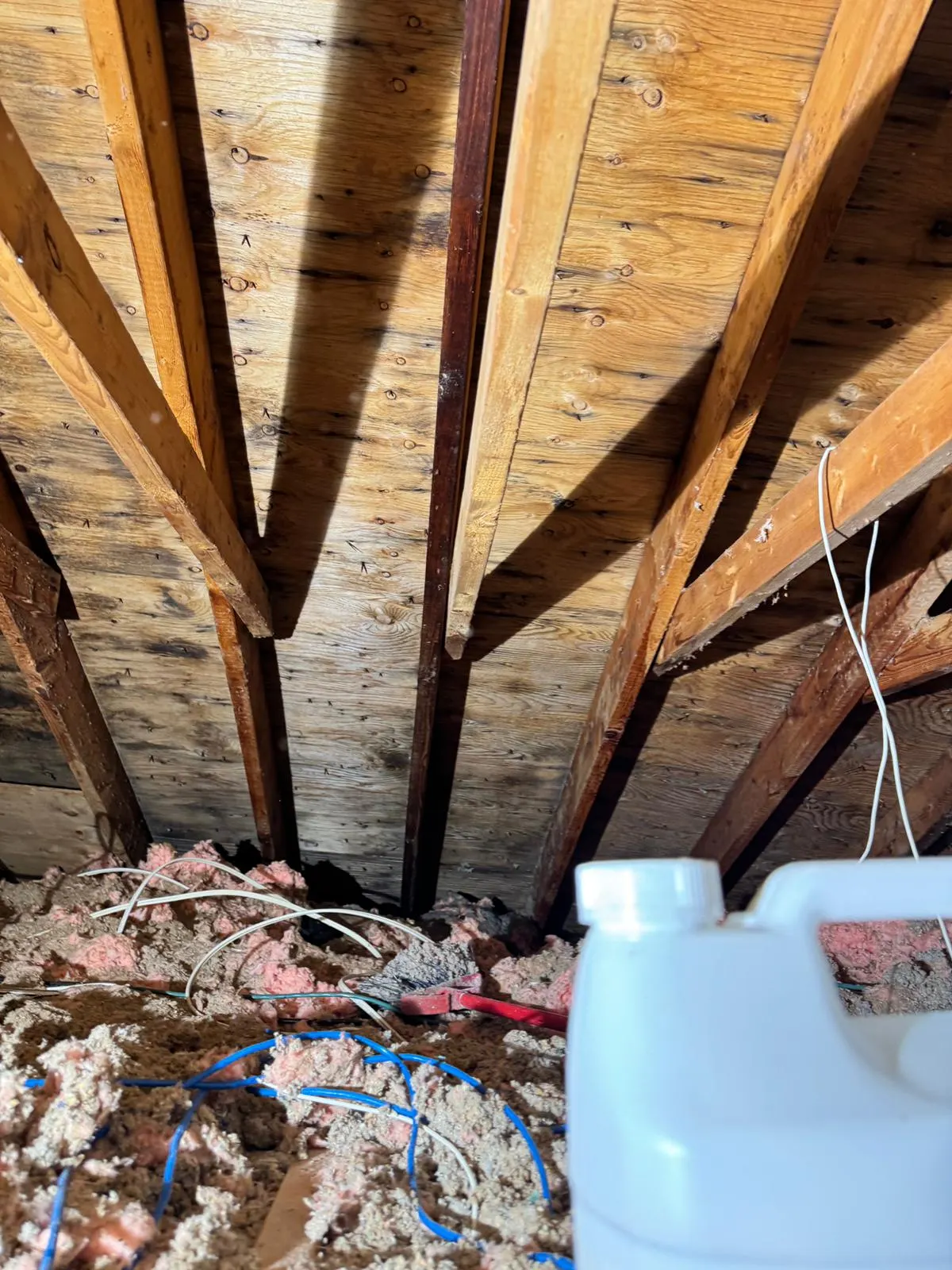
How our mold removal works
1. Diagnose the water first. Moisture meters and a thermal camera find the source: a leak, condensation, rising damp or ventilation. Skipping this step is how the discount guys guarantee repeat business.
2. Contain the area. Plastic sheeting and negative air keep spores from riding your furnace ducts into the bedrooms while we work.
3. Remove, do not just kill. Dead spores are still allergenic, so bleach-and-paint is not removal. Affected porous materials, drywall, insulation, carpet underlay, come out in sealed bags. Hard surfaces get HEPA vacuuming and damp wiping.
4. Treat and verify. Antimicrobial treatment, drying to normal moisture levels, and a final check with the meters before we hand the space back.
5. Fix the moisture. The scope always ends with a named cause and a fix, from rerouting a bathroom fan to repairing drainage. If the fix is beyond us, we say who to call instead.
What does mold removal cost?
| Job size | Example | Typical range |
|---|---|---|
| Small contained area | One bathroom wall, window returns | $500 to $1,500 |
| Medium | Basement room, cold room, crawlspace section | $1,500 to $3,500 |
| Large | Full attic underside, multiple rooms | $3,000 to $6,000+ |
The range moves with access, how much material must come out, and whether the moisture fix is simple or structural. Confirmed in writing before work starts.
Signs mold is hiding where you cannot see it
Most household mold is invisible from the room it affects. The tells are worth knowing: a musty smell that gets stronger after rain or showers, paint or drywall tape bubbling along a baseboard, a wall that feels cool and damp in one patch when the rest is dry, allergy-type symptoms that ease when you leave the house for a few days, and staining that returns in the same spot after cleaning. Any two of those together justify a proper look. On an assessment we check the usual suspects without opening anything: meter readings along exterior walls and plumbing runs, the attic hatch, under-sink cabinets and window returns. If the meters say there is a wet cavity, we open a small inspection hole where it will be easy to patch, and you see what we see before any decision is made.
Mould or mold?
Both. Mould is the Canadian spelling and mold is the American one that most search engines and product labels use. Same organism, same job. We answer to either.
Will insurance pay for mold removal?
Usually only when the mold resulted from a covered sudden loss, like the aftermath of a burst pipe that was properly claimed. Mold from slow leaks, chronic humidity or deferred maintenance is normally excluded, which is one more reason to deal with a musty basement this month rather than after it spreads. If your mold traces to a recent water loss, tell us: the claim may cover full remediation with containment and clearance testing, and we document accordingly.
Keeping it gone
Every removal ends with prevention advice specific to your house. The general version costs nothing and works:
- Run bathroom fans during and 20 minutes after showers, and make sure they vent outside, not into the attic.
- Hold basements under 60% relative humidity; a $30 gauge and a dehumidifier are the cheapest mold prevention that exists.
- Store boxes a hand-width off basement floors and away from exterior walls.
- Fix roof, plumbing and grading leaks the month you notice them, not the year.
Common mold removal questions
Is black mold dangerous?
Colour tells you almost nothing. Plenty of harmless molds are black and some troublesome ones are green or white; only a lab can identify a species. Reactions also vary hugely from person to person. Our advice is boring and honest: treat any indoor mold as something to remove promptly, keep people with respiratory conditions away from it, and take health questions to your doctor, not to a contractor.
Can I just clean mold myself?
A small patch on a hard surface, think smaller than a bathroom mirror, is a reasonable DIY job with detergent, gloves and ventilation. Go beyond that, or anywhere mold has gotten into drywall, wood or insulation, and scrubbing spreads spores rather than removing them. If it keeps coming back after cleaning, the problem is moisture, and no amount of wiping fixes moisture.
Do you test for mold before removing it?
When testing is genuinely useful, we arrange it through an independent third-party firm rather than doing it ourselves. A company that sells the removal should not be the one grading whether removal is needed, that is a conflict of interest. Often testing is unnecessary: if you can see mold, the money is better spent removing it and fixing the water.
How long does mold removal take?
A contained bathroom or single wall is usually one day. A basement or attic runs two to four days including drying and re-treatment. We tell you the schedule in the written scope before we start.
Will the mold come back?
Only if the moisture comes back. Mold is a symptom; water is the disease. Every removal we do ends with a named moisture cause and a fix for it, whether that is a fan venting outside, a graded downspout or a drainage repair. Remove mold without fixing water and you have rented a clean wall, not bought one.
What is the difference between mold removal and mold remediation?
Removal is the physical job most homeowners want: get the mold out and stop it returning. Remediation is the formal protocol, sealed containment, negative air pressure, HEPA scrubbing and third-party clearance testing, typically wanted by insurers, buyers or landlords who need documented proof. If your situation needs the formal version, we will say so plainly.